
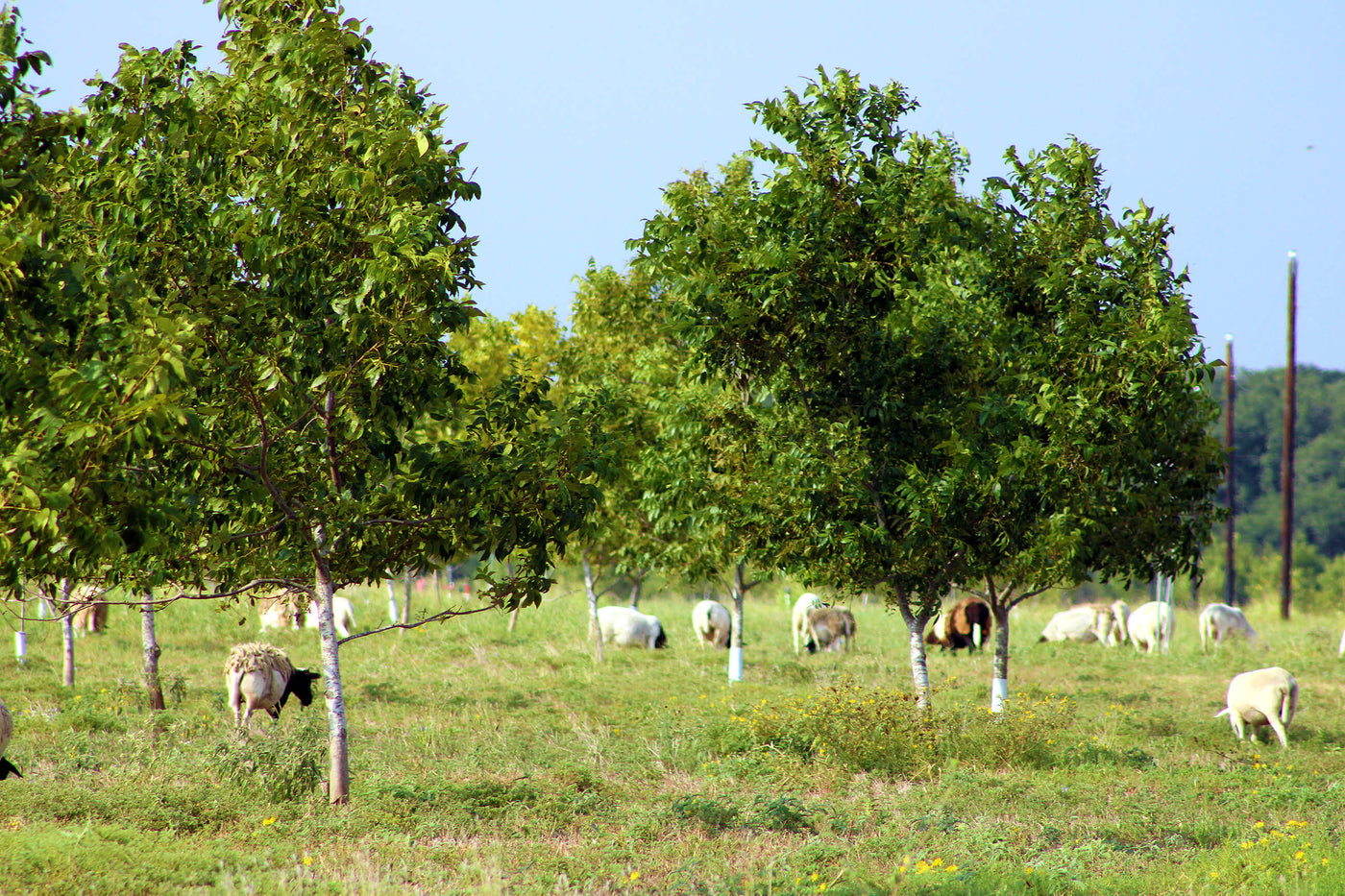

The land
No synthetic pesticides, no chemical fertilizers
We don't spray synthetic pesticides on our trees, and we don't feed them chemical fertilizers. The sheep handle fertility; careful timing, healthy soil, and old-fashioned attention handle the rest. It's slower and it's more work than spray-and-forget — that's the trade we've chosen, and it's the trade a lot of our customers are looking for.
We also keyline plow our pastures — and we rent the plow to landowners across Central Texas.

The people
Grown and Shipped by the Same Hands
We're a small family operation — the same folks who plant and prune the trees pick, sort, and bag the pecans and hand them to the mail carrier. We'd rather be out in the orchard than behind a desk. What matters is this: when you buy a bag of our pecans, you're buying them from the family that grew them — not a warehouse, not a middleman, not a brand that licensed a stock farm photo.
Our Commitment to the Land

Most food today is grown by tearing up the soil and replanting every single year. We do the opposite. A pecan orchard is perennial — the trees stand for generations, their roots never leave the ground, and the whole farm gets healthier with time instead of poorer.
Perennial, Not Replanted
Our pecan trees live for decades. No yearly tilling, no bare fields, no replanting — the roots stay put, holding the soil together season after season.
Carbon Back in the Ground
Where annual, tilled farming releases soil carbon into the air, a perennial orchard pulls carbon dioxide out of it and stores it in the ground — working with the climate instead of against it.
Sheep Instead of Sprays
Our Dorper flock grazes the orchard floor, replacing herbicide, mowing, and synthetic fertilizer in a single pass — and building living, biodiverse soil full of insects and microorganisms as they go.
Water That Soaks In
We keyline plow to open compacted ground so rain soaks deep instead of running off — a regenerative practice that fights erosion and keeps the land drought-ready. We rent the plow, too.
We farm for the long haul — healthy soil is a legacy, and we manage this land to leave it richer for the next seven generations.


Frequently Asked Questions
Where are you located?
Where are you located?
Just outside Bastrop, Texas, about an hour east of Austin — 540 Ponderosa Rd, Bastrop, TX 78602.
Is this really a family farm?
Is this really a family farm?
Yes — a working family orchard and sheep farm. The same people who plant and prune the trees pick, sort, and ship the pecans to you.
Are your pecans organic, or sprayed?
Are your pecans organic, or sprayed?
No synthetic pesticides and no chemical fertilizers — the sheep and the soil do the work sprays and synthetic feed do on a conventional orchard. We farm the way a certified grower would; we just haven't paid for the government label.
What do the sheep have to do with the pecans?
What do the sheep have to do with the pecans?
Everything. The Dorpers graze the orchard floor, which replaces herbicide, mowing, and chemical fertilizer all at once — and they become the grass-fed lamb we also sell. The sheep are why we can farm this way without spraying.
Where are the pecans grown and shipped from?
Where are the pecans grown and shipped from?
Our family orchard outside Bastrop, Texas. We sort, bag, and ship from the farm — the pecans don't pass through anyone else's hands.